
Croatia Visa for Nigerians – Application Process, Documents, & Eligibility

Laura Amber, Senior Traveler, Italy
Croatia, a jewel of the Adriatic, beckons travelers with its crystalline waters, sun-drenched islands, and historic walled cities. From exploring the ancient streets of Dubrovnik to island hopping in the Dalmatian archipelago, this beautiful country offers an unforgettable European escape. Hence, the plains and several islands surround the border of Hungary. Moreover, in this mountainous country, winters are cold and snowy, and mild summers. However, for citizens planning a trip from Nigeria, the first crucial step isn’t packing swimwear, but securing the necessary travel documentation.
Since joining the Schengen area, Croatia adheres to the standard visa policy, meaning a valid Schengen visa is the required entry permit. The application process, while straightforward when approached correctly, involves specific documentation like hotel reservations, travel insurance for visa application, and procedures that must be followed precisely.
By following our clear, step-by-step instructions, tips, and notes, you can confidently navigate the visa application process and focus on planning your incredible Croatian adventure. Read on to discover exactly how to secure your entry permit efficiently.
Understanding the Croatia Visa for Nigerians
Navigating visa requirements is a critical step in international travel planning. For Nigerian passport holders, entry into the Republic of Croatia is strictly regulated by the Schengen area/ border code.
Do Nigerians Need a Visa for Croatia?
Yes, absolutely. Nigerian citizens must obtain an appropriate visa before traveling to Croatia. This requirement is mandatory regardless of the purpose of your visit (tourism, business, visiting family) or the intended duration of your stay.
The primary reason for this universal requirement for Nigerian passport holders is rooted in international visa policies and the security agreements governing the Schengen Area.
| Key Point: Croatia is part of the Schengen Area. |
As of January 1, 2023, Croatia has fully integrated into the Schengen Area, a borderless zone comprising 29 European countries. This means:
- Croatian visa policy aligns with the unified Schengen rules.
- The application process, documentation, and fees are standardized across most Schengen countries.
- A major benefit: If a Nigerian citizen already holds a valid, multiple-entry Schengen visa issued by any other member state (e.g., Germany, France, Netherlands), they can use that existing visa to enter Croatia and travel freely within the entire zone, provided the visa is valid for the entire duration of their stay. However, if you do not have an existing Schengen visa, you must specifically apply for one through the Croatian authorities (via VFS Global).
Types of Croatia Visas for Nigerians
The type of visa you need depends entirely on the purpose and duration of your visit. It is essential to select the correct visa type to avoid application rejection.

1. Short-Stay Visa (Type C)
This is the most common visa for the average traveler and is known as the Uniform Schengen Visa (USV). A Type C visa is issued for a stay of up to 90 days within any 180 days. The 180-day reference period is a rolling window, meaning you can only spend 90 days total in the entire Schengen zone during that time frame.
It is suitable for non-immigrant purposes such as:
- Tourism & Holidays: General leisure travel, sightseeing, visiting national parks, beach holidays.
- Business Trips: Attending meetings, conferences, trade fairs, or short-term professional training.
- Private Visits: Visiting family or friends residing in Croatia. You will need a formal Letter of Guarantee from your host.
- Short-Term Study: Courses lasting less than 90 days.
- Cultural/Sports Events: Participation in events where you are not employed locally.
2. Long-Stay Visa (Type D)
If your intended stay in Croatia exceeds the 90-day limit, the Short-Stay Visa is insufficient. You require a national Long-Stay Visa (Type D).
This visa is specifically tied to a temporary residence permit application. You usually apply for the residence permit with the Croatian Ministry of the Interior or Police before you travel. Once the permit is preliminarily approved, the embassy or consulate issues a Type D visa, which allows you legal entry into Croatia to collect your physical residence card.
Purposes include:
- Employment: For a specific job offer from a Croatian employer.
- Formal Study: Enrolment in a university or long-term educational program.
- Family Reunification: Joining a Croatian citizen or legal resident spouse/parent.
- Scientific Research.
| Note: The application process for a Type D visa is more complex than a Type C visa and involves coordination with Croatian police and immigration authorities. |
3. Airport Transit Visa (Type A)
This transit visa is for travelers who are connecting flights at a Croatian international airport without actually entering the country’s territory (i.e., you remain within the international transit area and do not pass through immigration control). While many nationalities are exempt, Nigerian passport holders generally need to verify if this is required for their specific itinerary, as policies can fluctuate based on airport agreements and final destination.
Tip for Selecting the Right Visa: The majority of Nigerian tourists visiting Croatia will only need the Short-Stay Type C Visa. Ensure your supporting documents align perfectly with the category you select during the online application process.
Key Visa Application Hubs in Nigeria
You cannot apply directly at the Embassy of the Republic of Croatia in Abuja. Instead, all applications must be submitted in person through an official third-party service provider.
The official outsourced partner for processing Croatian visas in Nigeria is VFS Global.
You will need to submit your application and biometric data (fingerprints and a digital photograph) at one of their designated application centers (typically located in Lagos and Abuja).
- VFS Global Website for Croatia in Nigeria: For the most up-to-date information on application procedures, fee structures, and to book your mandatory appointment, you must use their official website: VFS Global Croatia Nigeria.
| Note: Always ensure you are using the official VFS Global website or links provided by the official Croatian Ministry of Foreign and European Affairs website. Be wary of unofficial visa agent websites that charge excessive fees or steal personal information. |
Essential Documents for a Successful Visa Application
A complete application package is the single most important factor for a successful visa outcome. The embassy uses these documents to verify your identity, assess your intent to return to Nigeria, and ensure you can support yourself financially during your stay in Croatia.
Here is a detailed checklist of mandatory documents for a standard short-stay (Type C) visa, complete with important tips and notes:
1. Valid Passport
Your passport is your primary form of identification. It must meet several strict criteria to be accepted for a visa application:
- It must be valid for at least three months beyond your planned date of departure from the Schengen area.
- It must have been issued within the last 10 years.
- It must contain a minimum of two blank pages for the visa stamp.
Tip: Bring the original passport and clear photocopies of the data page and any previous visas. Ensure no pages are torn or damaged.
2. Visa Application Form
First of all, you need to fill out a visa application form for a Croatian visa. Since it is a mandatory element of your visa. The form requires information about the following
- Personal information of an applicant
- Travel information (including arrival & departure date)
- Lodging details
- From the submission date & signature of the applicant
| Note: Any handwritten corrections or alterations to the printed form may require you to restart the online application process. Ensure all details are perfect before printing and signing. |
3. Passport-size Pictures
You must provide two recent color photographs that meet specific Schengen requirements. These specifications are rigid, so using a professional photo studio familiar with Schengen visa photos is recommended:
-
- Must have been taken within the last six months.
- Feature a white background.
- Must be the standard 35×45 mm size.
- Neutral facial expression (no smiling) and looking directly at the camera.
4. Proof Of Financial Resources
You need to submit recent bank statements, typically for the last three to six months, to demonstrate consistent income and sufficient savings to cover your stay.
-
- The authorities require access to at least €70 per day of stay if you have confirmed, pre-paid accommodation.
- The requirement increases to €100 per day if your accommodation is not fully paid for or is a private arrangement.
Note: Large, sudden deposits right before application can be viewed suspiciously; consistent savings are better.
5. Hotel Booking
You need to show confirmed hotel reservations that cover your entire stay in Croatia. If you plan to stay with friends or family, alternative documentation is required:

Having a hotel booking for visa application ensures that you have a proper place to stay in Croatia. So, provide the following information to the embassy
- Name and location of (hotel or hostel)
- Reservation code or rental agreement
- Arrival and departure dates
- Contact details
6. Travel Health Insurance Policy
This is a mandatory requirement designed to cover emergency medical expenses and repatriation costs in case of injury or illness while in Europe.

So, travel medical insurance is necessary to protect against illness. Thus, it is valid during your stay in Croatia. Also, cover the following fields
- Hospitalization expenses
- Loss of baggage
- Emergency flight cancellation
- Repatriation
Also, remember the following points;
- The policy must be valid throughout the entire Schengen Area (not just Croatia).
- Minimum coverage required is €30,000 (Euros).
| Note: You must obtain this from an accredited Nigerian insurer or an international provider approved for Schengen travel. |
7. Flight Reservation
A reservation or booking confirmation of a round-trip flight ticket is necessary to demonstrate your planned entry and exit from the Schengen Area.

Thus, it is a document that certifies the booked flight itinerary for the planned trip to Croatia. So contains information about
- Passenger name
- Name and number of flight
- Arrival & departure dates from the airport
- Flight reservation code & booking ID
- Airport IATA codes
- Connecting flights (if applicable)
Tip: It is highly recommended not to purchase non-refundable flight tickets until your visa has been approved. A flight reservation is sufficient for the application process.
8. A Cover Letter
Writing a cover letter ensures that you provide a summary of your travel plans. So, include information about the purpose of your visit, travel dates, and travel plan.

Moreover, you can follow these steps to write a proper cover letter.
- To get started, address the embassy or consulate professionally.
- Introduce yourself and provide some background information about your trip.
- Also, explain why you decided to visit the country.
- Enter information about your financial situation.
- Mention your previous travel experience.
- End the letter by thanking the authorities for considering your request.
- Sign your cover letter and include your contact information.
9. Proof of Employment/Status:
Documentation is required to prove your current socio-economic status in Nigeria, which helps assure the authorities that you have ties to your home country and intend to return.
- If Employed: A signed, original letter from your employer on company letterhead confirming your employment, position, salary, start date, and approved leave dates.
- If Self-Employed: Business registration documents (CAC certification) and recent tax clearance certificates.
- If Student: An official letter from your school/university confirming enrollment and approved absence is necessary.
- If Retired: Provide proof of pension fund statements.
| General Note: All documents submitted must be in English or Croatian. If your original documents are in another language, you must provide a certified translation along with the original document. Providing comprehensive and genuine documentation significantly improves your chances of a smooth approval. |
Additional Documents You Might Need
The following documents may be requested by the embassy, especially in cases involving minors, sponsorship, or specific travel purposes:
- Birth Certificate (for all applicants):
Some VFS checklists indicate a birth certificate in English may be required for all applicants, not just minors. It serves as fundamental proof of identity and parentage.
- For Minors (Under 18 years old):
- Notarized Parental Consent Letter: If the minor is traveling with only one parent or alone, a notarized consent letter signed by both parents/legal guardians (or the non-traveling parent/guardian) is mandatory. This letter should specify the travel purpose, duration, and the person responsible for the minor in Croatia.
- Copies of Parents’ Passports: A copy of the parent(s) passport(s) and their valid visa (if traveling together but applying separately) must be included.
- Proof of Parental Status: The minor’s birth certificate (with English translation) is required to prove the relationship.
- For Sponsored Applicants (e.g., unemployed, students, etc.):
- Formal Sponsorship Letter: A signed letter from the sponsor stating they will cover all expenses (travel, accommodation, daily costs).
- Sponsor’s Financial & Status Proof: You must attach the sponsor’s bank statements, proof of employment/business, and their passport copies. If the sponsor is a family member (parent/spouse), include a birth or marriage certificate to prove the relationship.
- Proof of Ownership of Property: If applicable, proof of property ownership in Nigeria (e.g., land deeds) can be submitted to demonstrate strong ties to your home country further.
- Previous Passports & Visas:
You should provide copies of entry/exit stamps and previous visas for Schengen, UK, USA, Canada, or Japan held within the last 5-10 years, as this establishes a positive travel history.
What Are the Steps to Apply for a Croatian Visa from Nigeria?
Applying for a visa can feel daunting, but when broken down into manageable stages, it’s a straightforward process. In Nigeria, the Croatian visa application is facilitated entirely through the VFS Global infrastructure. Follow these essential steps to ensure a smooth application
Since most Schengen countries’ visas are supported by “VFS Global”. So, to apply for a Croatia visa from Nigeria online, you need to follow these steps
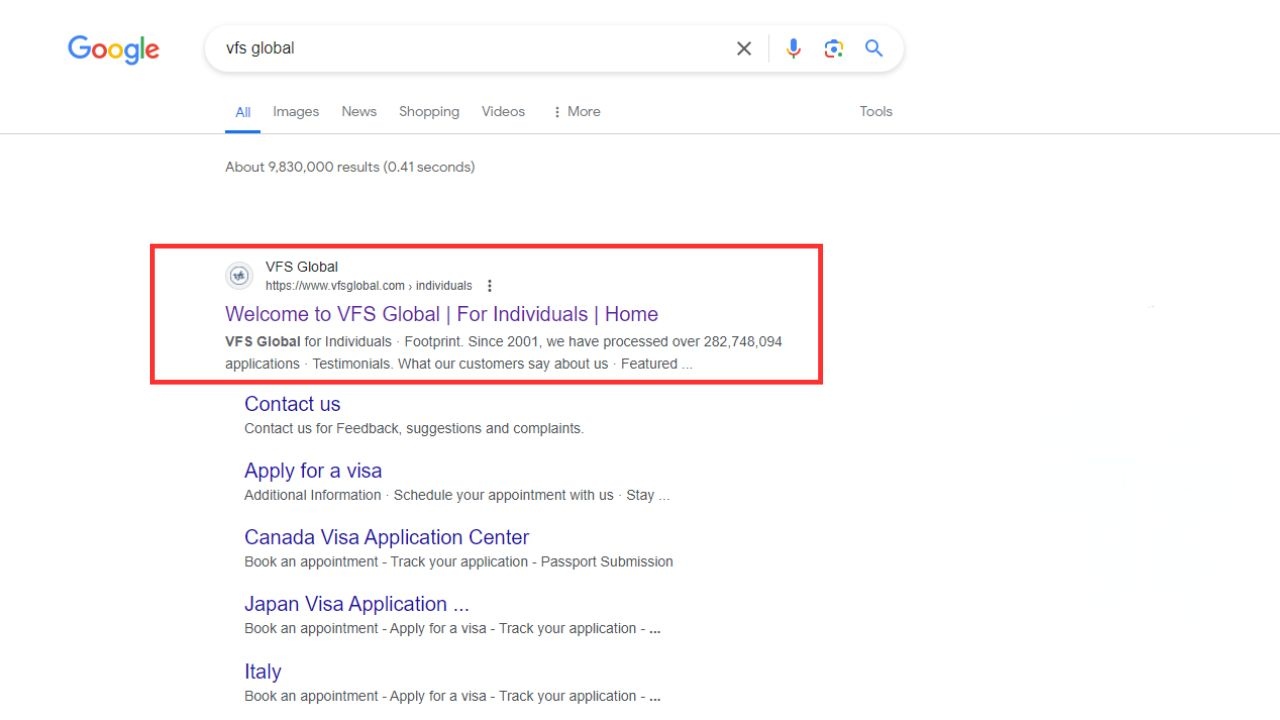
Step 1: Select Visa Option
Then, on the tab, you will see many options, so you have to choose “Apply for visa”. Then click on “Start now” for further Croatia visa processing.
- After that, a new tab will open showing you a “step-by-step guide” about visa application.
Step 2: Choose Visa Category
After that, select your visa type. So, you can choose it from the description “identify your visa”.
- So, click on “visa type” to select your visa kind. Then check your eligibility. After that, proper information about visas will be provided to you here.

Step 3: Complete the Online Application Form
Before you visit any physical office, you must initiate your application digitally to ensure your data is logged correctly in the Croatian immigration system. You need to go to the official Croatian Ministry of Foreign and European Affairs online portal to fill out the form. Select the correct visa type (likely Type C for tourism) and fill out the detailed form accurately, ensuring the information perfectly matches your passport details and supporting documentation.
- Action items for this step:
- Navigate to the official online visa portal.
- Fill in all personal and travel details meticulously.
- Print the generated form and sign it clearly in the designated fields.
| Tip: Take your time filling out the form. Any inconsistencies between the online form data and your physical documents can lead to delays or refusal. Double-check all dates (passport validity, travel dates, hotel bookings) before hitting submit. |
Step 4: Gather Required Documents
This step involves compiling a complete file of supporting evidence that validates the information on your application form. You need to refer to the detailed checklist (which will be provided in the next section of this guide) covering all necessary documents like your passport, photos, insurance, financials, etc. Ensure every document is translated into English or Croatian if it is in another language, and that you have both originals and clear photocopies as specified by VFS Global guidelines.
- Key tasks for this step:
- Identify all mandatory documents relevant to your visa type (e.g., proof of funds, accommodation, employment letter).
- Obtain official translations for any non-English/Croatian documents.
- Organize the complete dossier for submission.
Note: A missing document is the most common reason for an application being delayed or rejected. Do not attempt to attend your appointment with an incomplete set of paperwork.
Step 5: Book Your VFS Appointment
Once your online form is complete and you have your documents ready, you must schedule a time to submit everything in person and provide your biometrics. You will visit the official VFS Global website for Croatia in Nigeria and navigate to the “Schedule an Appointment” section.
- Booking process:
- Use details from your online application form (usually a reference number) to access the booking system.
- Select a specific date and time slot at the Lagos or Abuja VFS center.
- Print your confirmed appointment letter, which is required for entry.
| Tip: Appointment slots, especially during peak travel seasons (summer, Christmas), fill up quickly. Book your appointment as soon as you are confident in your travel dates and have your documents organized. |
Step 6: Submit Application and Biometrics
This is the physical part of the process where you formally hand over your application to the authorities. You will attend the VFS Global center on your scheduled date and time with your appointment letter and all documents.
- During the appointment:
- Pay the required visa fee and the VFS service fee.
- An officer will review your paperwork for completeness and accuracy.
- Your fingerprints will be digitally scanned and a recent photograph taken (biometric data collection).
- You will receive a receipt with a tracking ID once the application is officially lodged.
Note on Biometrics: Biometrics are mandatory for all applicants over the age of 12. While you might be exempt if you provided Schengen biometrics within the last 59 months, you still need to attend the appointment to submit documents. Always confirm the current policy on the VFS website.
Step 7: Track Your Application Status
After submission, all you can do is wait for the outcome. You use the tracking ID provided on your submission receipt on the VFS Global tracking portal to monitor the progress of your application. You will receive a notification (SMS/Email, depending on the service you paid for) when your passport is ready for collection at the VFS center.

- Tracking steps:
- Access the dedicated tracking portal online.
- Input your unique tracking ID and date of birth.
- Monitor status updates (e.g., “In Transit to Embassy,” “Processing,” “Ready for Collection”).
| Tip: Processing times are estimates only, usually around 15 working days. The embassy reserves the right to hold a passport for up to 45 or 60 days if further verification is needed. Patience is key during this step. |
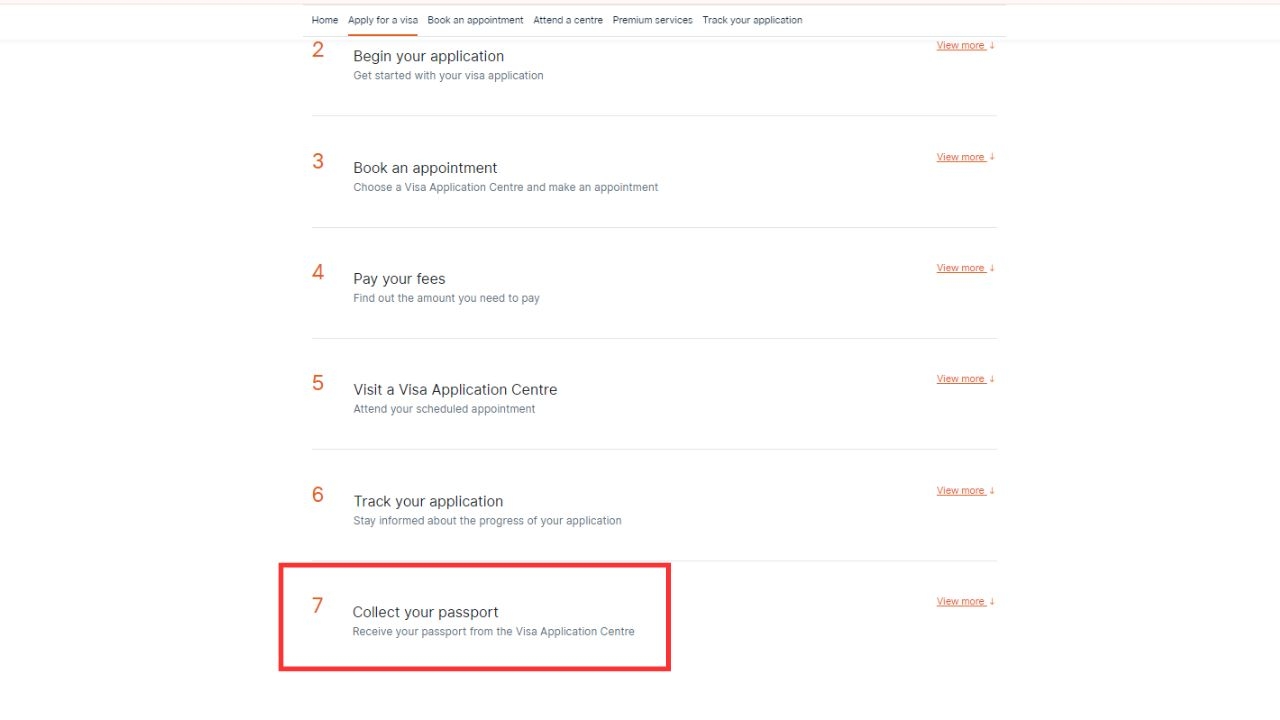
Step 11:Collect Your Passport
Lastly, get ready to collect your passport. Thus, bring the required documents with you when going to collect your passport.
Fees and Processing Times
Understanding the costs and waiting period is crucial for budgeting and planning your trip to Croatia. Fees are standardized across the Schengen area but subject to change.
Croatia Visa Fees for Nigerian Citizens
The visa application involves two separate fees: the standard visa fee for the embassy and the service fee charged by VFS Global for their administrative services.
- Standard Schengen Visa Fee (Embassy Fee): This fee is typically set in Euros but paid in the local currency (Nigerian Naira) based on the current exchange rate.
- Adult Applicants (12+ years): The standard fee is approximately 90 Euros (Naira equivalent).
- Children (6 to 11 years): A reduced fee of approximately 45 Euros (Naira equivalent) applies.
- Children (Under 6 years): Children under the age of six are exempt from the visa fee.
- VFS Global Service Fee: This is a separate, non-refundable charge for the use of the VFS application center’s services, biometric collection, and handling. This fee is paid directly to VFS Global at the time of your appointment. The exact amount varies slightly but is usually in the range of ₦15,000 to 25,000 Naira.
Disclaimer: All fees are subject to change without prior notice and should be verified on the official VFS Global website on the day you book your appointment. Fees are non-refundable even if your visa application is denied.
Processing Time: When Will I Get My Visa?
The time it takes to process your application starts from the moment VFS Global submits your complete file to the Embassy of Croatia in Abuja.
- Average Processing Time: The typical processing time is approximately 15 working days (about three weeks). This is a standard timeframe for Schengen applications from Nigeria.
- Maximum Processing Time: The embassy reserves the right to take longer if further scrutiny is needed. In certain complex cases, processing can be extended up to 45 or even 60 calendar days.
| Tip: We highly advise applying well in advance of your trip—at least 1-2 months before your planned travel dates. This buffer time accounts for potential delays or requests for additional information without jeopardizing your travel schedule. |
Frequently Asked Questions (FAQ) Section
This section addresses specific, nuanced questions that Nigerian applicants often have, moving beyond the basic application steps covered above.
1. Can I travel to Croatia with a standard UK, USA, or Canadian visa instead of a Schengen visa?
No, not automatically. Croatia is part of the Schengen Area and requires a valid Schengen visa for entry. While a valid, multiple-entry Schengen visa from another member state (e.g., France, Spain) allows you to enter Croatia, national visas like those for the UK, USA, or Canada do not grant automatic access to the Schengen zone or Croatia.
2. What happens if my visa application is rejected? Can I appeal?
Yes, you have the right to appeal a visa refusal. The rejection notice you receive from the embassy will clearly state the reason(s) for the refusal and provide instructions on the appeals process. The appeal must typically be submitted in writing (in English or Croatian) to the Embassy of Croatia in Abuja within a specified deadline (usually 8 days).
3. I plan to visit other Schengen countries after Croatia. Which embassy should I apply to?
You must apply to the embassy of the country that is your “main destination.” This is generally defined as the Schengen country where you will spend the longest duration of time. If you plan to spend 7 days in Croatia and 3 days in Slovenia, you apply for a Croatian visa. If you spend 3 days in Croatia and 7 days in Italy, you apply for an Italian visa.
4. Do I need a biometric passport to apply for a Croatian visa?
While not explicitly mandatory in all official documentation for visa application submissions, the Nigerian government currently issues electronic (biometric) passports. Having a machine-readable, biometric Nigerian passport is standard practice and highly recommended for smooth international travel and visa processing. Ensure your passport is in the current e-passport format.
Conclusion
Securing a visa for Croatia from Nigeria is a highly manageable process, provided you are thorough and well-prepared. The key lies in carefully following each step, gathering all necessary documentation, and starting your application well in advance of your travel dates. By utilizing the official channels through VFS Global and ensuring your application meets all Schengen requirements, you can navigate the process smoothly.
We hope this comprehensive guide by SFRV Travels has demystified the requirements and steps needed for your journey. Croatia is a magnificent destination, and with your visa secured, you are one step closer to experiencing its stunning Adriatic coastline and rich history.
Don’t wait until the last minute to begin your application. Take the next step towards your European adventure today:
- Start your application by filling out the online form on the Croatian Ministry of Foreign and European Affairs portal.
- Book your mandatory appointment and review the latest checklists on the official VFS Global Nigeria portal.
Read also:
- Italy visa from Nigeria: Learn about the latest documents and how to apply for an Italy visa from Nigeria.
- Austria visa from Nigeria: See our step-by-step guide to make the visa process for the Austria visa for Nigeria easier.
A little Bit About Us
At Schengen Flight Reservation for Visa, we make the often overwhelming visa process a breeze. With verifiable documents at unbeatable prices, you are covered with Flight Reservations/Itinerary/Dummy tickets, Hotel Bookings (Proof of Accommodation), and a Travel Insurance Policy.
But that’s not all. Our services and blogs on writing a cover letter for a visa make your application process even smoother.
Are you stuck on something? Check our FAQs section or connect with us anytime through our 24/7 Live Chat because your convenience is our priority.
Our Blog section is your ultimate guide to navigating the ever-evolving world of visa policies & requirements.
Whether you are curious about the visa requirements for any country, changing visa rules & regulations, or need a comprehensive guide about any topic or visa of any country, then simply type your Query in our Blog search bar & get the ultimate detail in just a click.
So, let’s make your visa journey seamless, informed & stress-free!
most searched articles