
EU Authorises Temporary Biometric Suspension at Schengen Borders to Avert Summer Travel Chaos

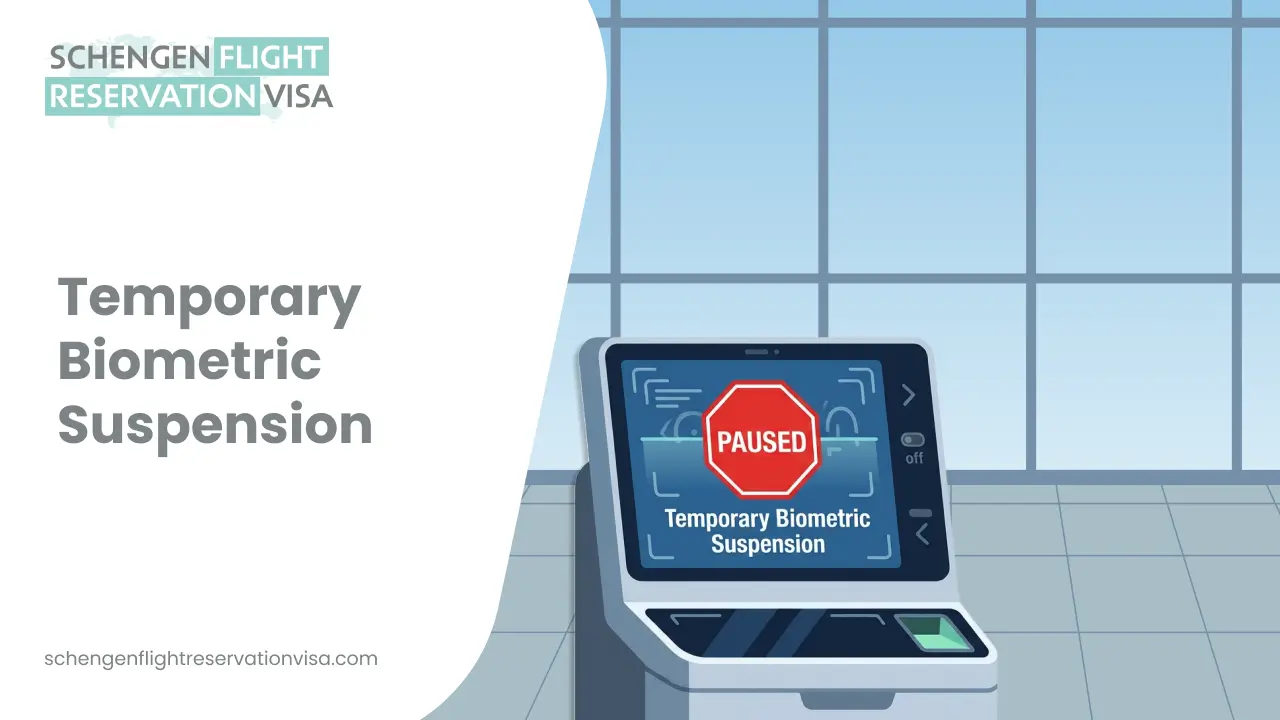
The Schengen countries have been facing a mounting crisis at their external borders for the past few months. Therefore, the European Commission has officially authorised these states to temporarily suspend mandatory biometric data collection at the external borders.
The decision was announced on May 4, 2026, as a direct response to the unacceptable queues that led to congestion and technical failures and have plagued the EES (Entry/Exit System) since its full implementation on April 10, 2026.
This move provides an essential emergency brake in the digital border regime of the bloc, where authorities can ensure the flow of passengers before obtaining biometric data during peak travel hours.
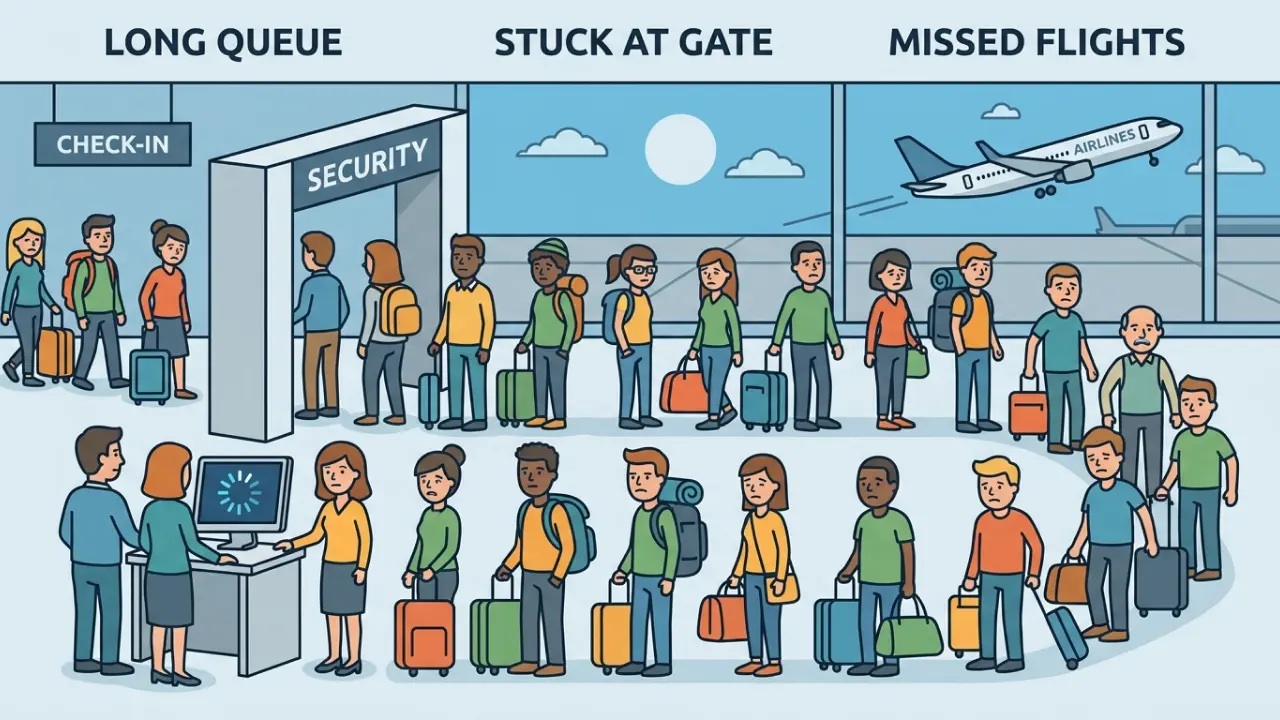
An Emergency Brake or Breaking Point for Hour-Long Queues and Missed Flights
The Entry/Exit System was designed to replace manual stamping of passports at the borders with a high-tech digital registry of fingerprints and facial scans. However, the reality is a bit different at major transport hubs and is failing to meet the promised efficiency. Since the system went live, travellers have faced heavy delays.
The change introduces a built-in flexibility or emergency brake, allowing immigration officials to put on hold the mandatory collection of biometric data during an overwhelming influx of passengers. According to the new policies, border control agents can revert to old-style passport stamping to keep things running smoothly.
This does not mean that the EES has been eliminated. The system, which has already collected more than 61 million records, remains active. Instead, it provides a relief valve for major airports like Paris-Charles de Gaulle (CDG), Amsterdam Schiphol, and Frankfurt.
Increasing Pressure on Airline Companies and Hubs
The move by the commission came after heavy lobbying from member states, such as Belgium, France, Germany, and the Netherlands. The four states had expressed that non-EU citizens faced waiting times ranging from 40 minutes to even a few hours at some major airports.
For instance,
- Paris-Charles de Gaulle (CDG) & Amsterdam Schiphol reported bottlenecks that led to two hours of increased arrival times.
- Lisbon Airport in Portugal witnessed delays stretching to seven hours. As a result, this led to a localised suspension of checks this year.
- Brussels Airport and the Eurostar terminal reported wait times of up to 60 minutes or one hour for non-EU nationals.
Ryanair and Airlines for Europe (A4E) are the leading airlines and industry groups in the EU. Moreover, they have been vocal in their criticism over this issue. Thus, they urged a total suspension of the system until after the summer. This is because of the severe disruption and hundreds of missed flight connections at major Spanish hubs, including Madrid-Barajas and Palma de Mallorca.
The Scope of the Suspension and How it Works
Although the EES system was created to automate the stamping process, making it more efficient and secure, it has been plagued by technological difficulties and insufficient staff. The European Commission has outlined that such flexibility will be available for up to 90 days, after which an additional 60-day extension can be granted for the holiday period in July and August.
Such inherent flexibility allows the authorities to halt fingerprinting and facial image capture when the number of people queuing goes beyond certain limits. In such a case, the border officials will fall back on the traditional manual process of putting stamps on passports or a light EES minus, where some simple passport information is collected.
In other words, while the EES is supposed to be mandatory, travellers will continue to get stamped in their passports at arrival times considered excessive. The Commission assures that this provision will be phased out by September 30, 2026, when enough additional airport personnel and improved versions of the automated Parafe gates will be ready for use.
Technical Glitches and Staffing Shortage
The high passenger volume is not the only leading reason that hampered the rollout. Other factors, such as technical instability in the central IT systems, which are managed by eu-LISA, and a lack of fully automated equipment, have slowed the process.
Parafe e-gates of France expected to be fully operational and compatible by March. However, they are still struggling to process non-EU passports consistently.
The Eurotunnel and the Port of Dover in Kent have faced significant hurdles. Besides, the local authorities have been warning that the system could be a potential car crash if these relaxations are not implemented.
Commission spokesperson Markus Lammert said that implementing and practising such a large-scale system is a complete task. The extension of the flexibility for the summer period will give Member States enough time to manage the necessary tools to solve potential problems. Thus, avoid summer travel chaos easily.
Impact on Non-Schengen Travellers
This change is particularly important for travellers who are coming from third countries, such as the UK, Australia, and the United States. Though Cyprus and Ireland remain outside the Schengen biometric zone, their airlines and corporate travellers are impacted greatly when transiting through the major European hubs that are still struggling with the EES rollout.
The immigration officers stress that security continues to remain important. Even if the biometric screening is stopped, the airlines will have to send the Advance Passenger Information (API), and the travellers could also be screened manually for their credentials.
Looking Ahead: The Road to ETIAS
Although there may be some teething issues at the moment, the EU claims that the EES is crucial for detecting overstays and combating identity fraud. Moreover, it will form the basis for the upcoming European Travel Information and Authorisation System (ETIAS), which will be similar to the ESTA system used in the US, planned for late 2026.
The current flexibility window is strictly set to expire by September 30, 2026. Industry leaders, while welcoming the breathing space, urge travellers to remain proactive. Experts recommend arriving at airports earlier than usual and utilising any available pre-registration apps, such as the Frontex Travel to Europe app, to speed up processing once biometric checks resume.
A little Bit About Us
At Schengen Flight Reservation for Visa, we make the often overwhelming visa process a breeze. With verifiable documents at unbeatable prices, you are covered with Flight Reservations/Itinerary/Dummy tickets, Hotel Bookings (Proof of Accommodation), and a Travel Insurance Policy.
But that’s not all. Our services and blogs on writing a cover letter for a visa make your application process even smoother.
Are you stuck on something? Check our FAQs section or connect with us anytime through our 24/7 Live Chat because your convenience is our priority.
Our Blog section is your ultimate guide to navigating the ever-evolving world of visa policies & requirements.
Whether you are curious about the visa requirements for any country, changing visa rules & regulations, or need a comprehensive guide about any topic or visa of any country, then simply type your Query in our Blog search bar & get the ultimate detail in just a click.
So, let’s make your visa journey seamless, informed & stress-free!
most searched articles