
Your Ideal 3-Day Paris Itinerary: From Icons to Local Secrets

The capital of France is one of the most enduring centers of culture, fashion, art, and history in the world. As a result, it draws millions of travelers to its cobblestone streets each year. But experiencing the City of Light requires a thoughtful and balanced Paris 3-day itinerary for logistical preparation and realistic planning.
Therefore, you can navigate the city’s unique administrative layout to understand its local social and financial etiquette. That is why your pre-trip choices shape your travel experience. So, if you master these foundational elements before you pack your bags, you can transform an overwhelming vacation into an efficient and respectable journey.
Tidbit about Paris
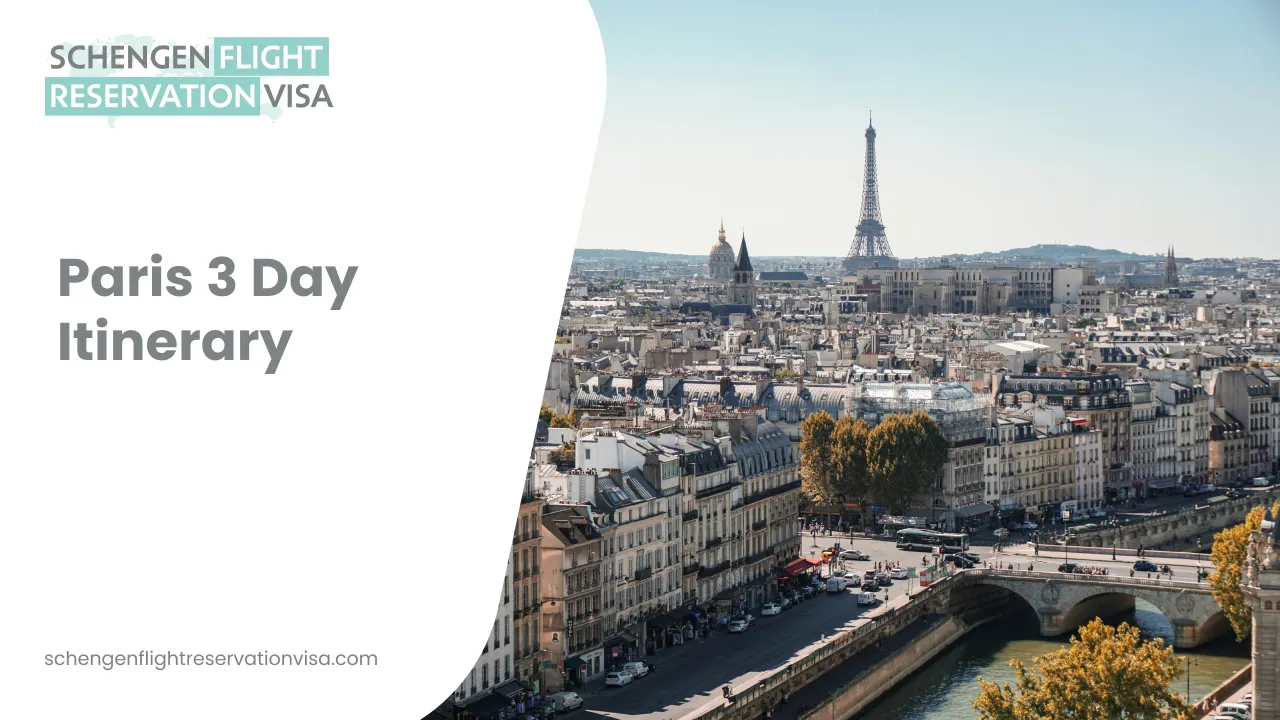
Paris is an international hub for fashion, art, gastronomy, and centuries of architectural history. Moreover, this French capital is situated along the scenic Seine River. The city is organized into almost 20 numbered districts called arrondissements, which spiral outward clockwise from the central core like a snail shell.
Additionally, navigating the city is highly efficient, thanks to the extensive RATP public transit network. Thus, this makes it simple to travel between historic landmarks on the central islands and the bohemian hills of its outer neighborhoods.
Introduction to Paris 3-Day Itinerary
Welcome to the Paris 3-Day Itinerary. The city boasts iconic landmarks, delectable cuisine, and vibrant cultural experiences. In this three-day tour, you will enjoy wandering the mesmerizing streets, museums, and restaurants. Paris has some of the world’s most famous restaurants where you can savor croissants in a cozy café. In the same way, each day will introduce you to a new charm. For instance, Montmartre is an artists’ village formerly inhabited by Picasso and Dali.
Moreover, the importance of the Louvre is second to none. Here you can find canonical works of Western art such as the Mona Lisa and Venus de Milo.
In short, this comprehensive guide breaks down the vital financial, legal, and cultural factors for visiting Paris. Along with that, it also outlines the Schengen visa application framework to deliver a thoroughly structured 3-day itinerary designed to maximize your time.
So, tighten your seatbelt and embark on the adventure.
Factors to Consider Before Traveling to Paris
A seamless trip to Paris depends significantly on choreography before you even arrive in the city. Lack of knowledge concerning neighborhood considerations, seasonality, reservation habits, and local laws may cause cost escalation and missed chances.
The Arrondissement System and Lodging Strategy
Paris comprises 20 administrative regions called arrondissements, which spiral in a clockwise direction away from the center of the city like a snail shell (escargot). Knowing this is crucial for finding accommodation.
- The Core (arrondissements 1st to 4th): Where the Louvre, Île de la Cité, and the Marais lie. This is very pedestrian-friendly and demands higher accommodation prices.
- The Left Bank / Rive Gauche (arrondissements 5th to 7th): Latin Quarter, Saint-Germain-des-Prés, Eiffel Tower. This region offers you a traditional academic experience.
- Outer Rings (10th to 12th, 18th to 20th Arrondissements): Districts such as Montmartre (18th), Canal Saint-Martin (10th), and Belleville (20th) provide a more Bohemian feel. Although affordable, they need to be accessed via Metro for a longer period to reach the center landmarks. When looking for accommodations, being closer to a Metropolitan (Metro) stop is more important than a landmark.
Seasonal dynamics
Paris experiences seasonal shifts that define the pricing, crowd density, and overall ambiance.
- Shoulder seasons: Months including March to May and September to November present the exemplary balance for travel. The spring’s chestnut trees in the Luxembourg Garden and the golden Seine banks in autumn are worth witnessing. In addition, temperatures are mild (10 to 20°C ) and queue times are manageable.
- Peak summer: This season (June to August) is famous for heavy tourist crowds, high hotel rates, and occasional heatwaves. Due to annual family holidays, many locally owned bakeries, shops, and bistros close entirely in August.
- Winter low season: December to February offers the lowest accommodation pricing and minimal crowds. However, this does not include the Christmas holiday period. Besides, the daylight hours are short, and the weather is frequently cold and rainy.
Finances and Paris tourist tax (Taxe de Séjour)
France is a very advanced country in terms of technology; credit cards and debit cards are accepted everywhere through contactless payment options. Nonetheless, it is helpful to keep from €20 to €50 in small amounts of euros in coins or notes when going to market stalls or using public washrooms.
Tourists have to make sure they account for the mandatory tourist tax while making budget plans. The Taxe de Séjour is levied on all non-residents over the age of 18. It is based on a per-person-per-night calculation in accordance with the star category of the hotel.
- Palaces Hotels: €15.60 per person/night
- 5-Star Hotels: €11.38 per person/night
- 4-Star Hotels: €8.45 per person/night
- 3-Star Hotels: €5.53 per person/night
- 1 or 2 Star Hotels/Hostels: €2.60 – €3.25 per person/night
The infrastructure of public transportation
Traveling within Paris using the public transportation system is highly effective and is coordinated by the RATP (Régie Autonome des Transports Parisiens).
- Metro: Consists of 14 normal lines and 2 automated lines (lines 1 & 14). A normal T+ single fare ticket is priced at €2.55.
- RER: Express train services that run from the city center to the outer suburbs. The RER B will take you from Charles de Gaulle (CDG) Airport to central Paris (€14 one-way ticket), while the RER C line will take you to the Palace of Versailles.
- Transit Cards: It is best not to buy cardboard tickets since they demagnetize easily. Rather, get yourself the Navigo Easy card (€2 reusable card) from any station counter or use the mobile app of Île-de-France Mobilités to load 10 tickets (carnet).
The Bonjour rule and cultural etiquette
French social interactions depend on formality in politeness. The most important cultural etiquette is to address the waiter or any other service staff with a clear “Bonjour” (or “Bonsoir” after 6:00 PM) before making any demands. The lack of this greeting while conducting business can be perceived as impolite behavior.
Furthermore, French restaurant table service is quite lazy. The waiters will not rush you or even bring your bill at the end of the meal. You have to ask for the bill directly. The correct phrase to order the bill is L’addition, s’il vous plaît.
Visa Requirements for Entering France
If you are a traveler from a non-European Union or non-Schengen Zone nation, you need to meet the specific entry regulations to travel to France. Go through the following section.
Who needs a visa?
Generally, two types of travelers can visit France. The first are visa-exempt nationalities, and the other is visa-required nationalities. Let’s take a look at both of them separately.
- Citizens of certain countries, including the United States, Japan, the United Kingdom, South Korea, Australia, and Canada, do not require a visa for a short-term stay (business or tourism) in any of the Schengen states for up to 90 days. However, in case of a stay longer than 90 days, they need to apply for a specific visa type. Also note that these travelers must track their total duration of stay in Europe to ensure they do not exceed the 90-day limit within any 180-day rolling window.
- Secondly, other citizens from countries such as Africa, the Middle East, Asia, and parts of South America must secure a short-stay Schengen visa before boarding their flight.
French visa application process
You can initiate the application process through the France-Visas Portal. Moreover, the authorities also utilize administrative partners, including VFS Global, to manage visa application centers across the globe.
Mandatory document checklist
If you want to have a successful application process without rejection, you need to compile a comprehensive file containing the following documents.
- The official visa application form, which should be completed and signed
- A passport with a validity of three months beyond your stay in France, issued within the last 10 years, and with two blank pages for visa stamping.
- Two identical and recent passport-sized photos according to the ICAO specifications. This includes no shadows, a light background, face occupying 70-80% of the frame.
- Furthermore, fully verified flight reservations or round-trip travel proof to show flight numbers, passenger names, travel dates, etc.

- Also, you need to have confirmed hotel bookings or rental agreements to cover every single night spent within the Schengen Zone. If staying with friends and family members, submit a certificate of welcome stamped by the host’s local municipal town hall.

- A trip to the Schengen Area requires you to have medical travel insurance with a minimum coverage of 30,000 euros to cover emergency medical care and unexpected travel loss.

- In addition, proof of financial resources, such as bank statements, salary slips, or income tax return slips, will help you submit a healthy profile. Make sure to have an approximate balance of 65 to 120 euros per day of your trip.
- Last but not least, proof of professional or academic ties is needed to explicitly show the approval of vacation leave. This will also help you demonstrate that you have a plan to return to your home country.
Timeline and fees
The standard consular processing fee for an adult Type C visa is 90 euros, which is payable in the local currency of the application center.
Also, make sure to submit your application at least 6 months in advance. This is because processing durations fluctuate based on seasonal request volumes.
Paris 3-Day Itinerary – Day One
Breakfast.
At 8:00 AM, start day 1 of your Parisian adventure with a delightful breakfast at a local café. For this purpose, look for a café in the Marais or Montmartre districts. Moreover, the traditional breakfast consists of croissants, pain au chocolat, or a classic French omelette. The morning tea is accompanied by a piping hot chocolate or a cup of well-brewed coffee. The price of the breakfast is 10-20 EUR per person.
Visit the Louvre Museum.
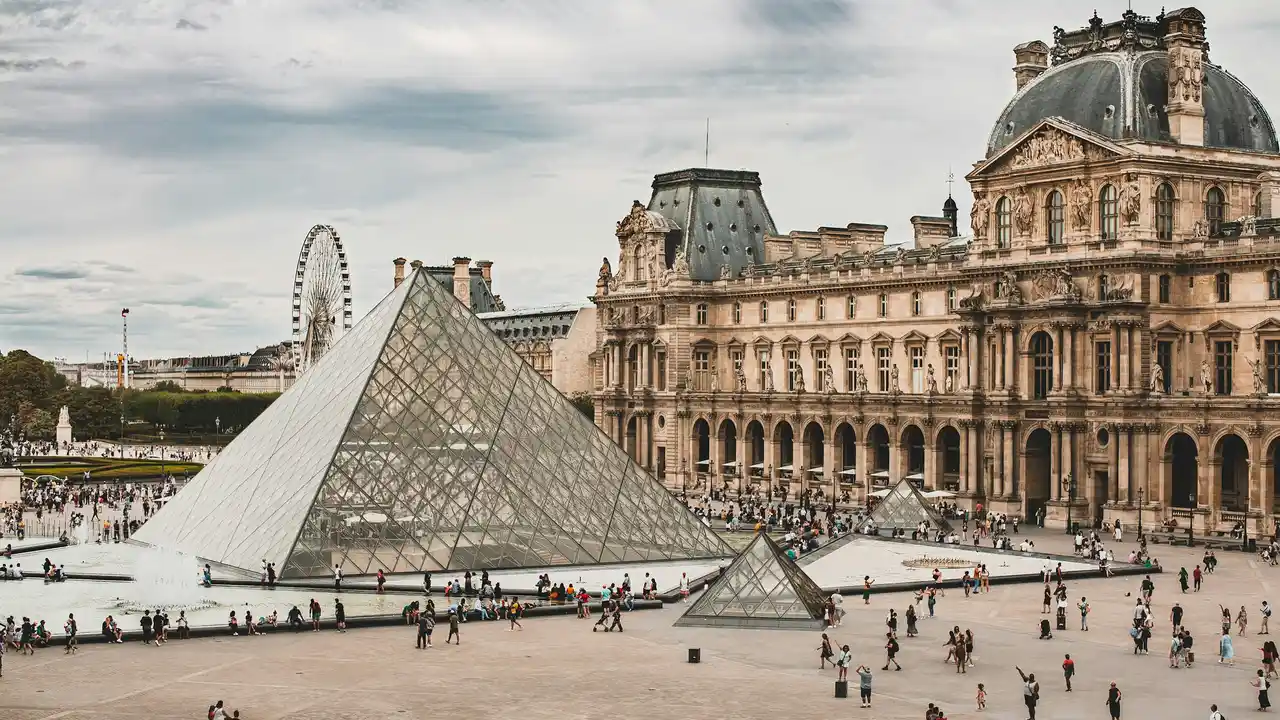
At 9:30 AM, explore the iconic Louvre Museum, home to thousands of artworks, including the renowned Mona Lisa. Stroll through its grand halls and take advantage of the glass pyramid in the courtyard. The address of the museum is Rue de Rivoli, 75001 Paris, France. Moreover, before entering, pay 12-17 EUR for a ticket. It will take approximately 2-3 hours to explore the whole museum.
Lunch at a traditional French bistro.
At 12:30 PM, prepare for lunch. Preferably, choose a cozy French restaurant in Le Marais or Saint-Germain-des-Prés. Moreover, indulge in French culinary delights with options like “coq au vin” (chicken in red wine), “quiche Lorraine,” or “croque-monsieur,” all accompanied by a glass of fine French wine. Owing to proper time management, you need to spend an equal number of hours in every place. Try to finish your lunch in 1-1.5 hours. Lastly, this may cost you around 20-40 EUR per person.
Explore the Notre Dame Cathedral.
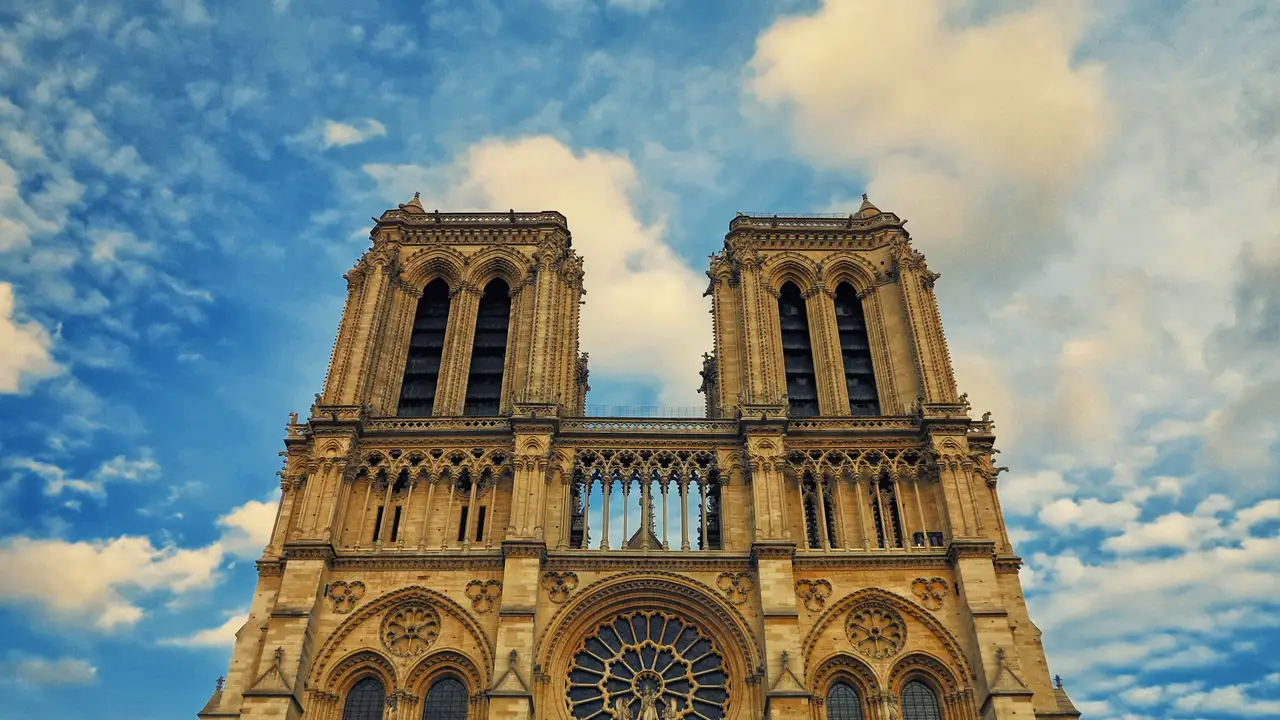
At 2:30 PM, explore the Notre Dame Cathedral. The entrance fee per person is 10-12 EUR. The address is 6 Parvis Notre-Dame – Pl. Jean-Paul II, 75004 Paris, France. Moreover, spend at least 1-1.5 hours there. Approximately 1-2 hours are enough to explore the building inside out. Marvel at the stunning Gothic architecture of the Notre Dame Cathedral, with its impressive rose windows and iconic towers. Climb to the top for panoramic views of Paris.
Coffee break with French pastries.
By 4:00 PM, you must have a coffee break for relaxation. Therefore, take an hour to find a charming café in Île de la Cité or the Latin Quarter. Relax and savor delectable French pastries like “éclairs,” “macarons,” or “tarte au citron” with a cup of aromatic coffee or tea. Lastly, keep in mind that the price for the coffee may range from 5-10 EUR per person.
Dinner at a Traditional Parisian brasserie.
At 7:00 PM, have a traditional dinner. Choose an ancient Paris brasserie like “Le Bouillon Chartier” or “Le Procope” for dinner. Moreover, you can enjoy the best options such as “boeuf bourguignon” (beef stew), “coquilles Saint-Jacques” (scallops), or “cassoulet.” The dinner is served in a very elegant way. The price for this dinner may vary. However, the standard price may be 25-45 EUR per person. Lastly, enjoy your meal for 2 hours and undertake a pleasant evening walk.
Experience Paris’s vibrant evening atmosphere.
At 9:30 PM, explore Paris’s vibrant districts, such as the Latin Quarter or Le Marais. Discover the enchanting evening ambiance of Paris. Walk through the lighted historical streets. Enjoy live folk music in a local jazz club. The price for this adventure varies based on your choice. Lastly, spend at least 2-3 hours.
How a Travel Guide Can Help You During Your Paris 3 Day Itinerary?
A well-structured travel guide acts as a necessary logistical structure that turns an overwhelming 3-day trip to Paris into a smooth and trouble-free experience. It does this by compiling all the cultural, geographical, and functional information that you need for your trip in order to utilize your 72 hours effectively while avoiding common tourist pitfalls.
- Eliminates decision fatigue by pre-selecting top attractions. Thus, you can move easily from one activity to the next without stopping to plan.
- Optimizes geographic routing to minimize cross-city metro transit times. Therefore, this makes sure that you visit all the city’s highlights on the same afternoon because they are steps apart.
- Provides critical booking timelines for high-demand, sold-out monuments. Moreover, a travel guide also teaches you how to navigate the RATP transit system to prevent costly booking mistakes.
- Bridges cultural communication gaps with essential local etiquette tips. Surprisingly, if you know these customs in advance, this will prevent embarrassing social friction and help you navigate restaurants and markets like a seasoned resident.
- Protects your travel budget with targeted money-saving dining strategies. With a travel guide, you will easily get to know about the famous dining places and how to handle the tipping culture.
- Prevents localized petty crime by exposing common tourist street scams. Furthermore, a travel guide also offers money-saving strategies to keep your spending on track. For example, this includes using the Paris Museum Pass or cheap park picnics.
Paris 3-Day Itinerary – Day Two
Breakfast.
Start your day with a classic French breakfast at a local café.
Time: 8:00 AM
Price: 10-20 EUR per person
Duration: 1 hour
Address: Find a café near your accommodation.
Begin your day with a buttery croissant, “pain perdu” (French toast), or “crêpes” accompanied by a café au lait or a refreshing glass of orange juice.
Visit the Eiffel Tower.
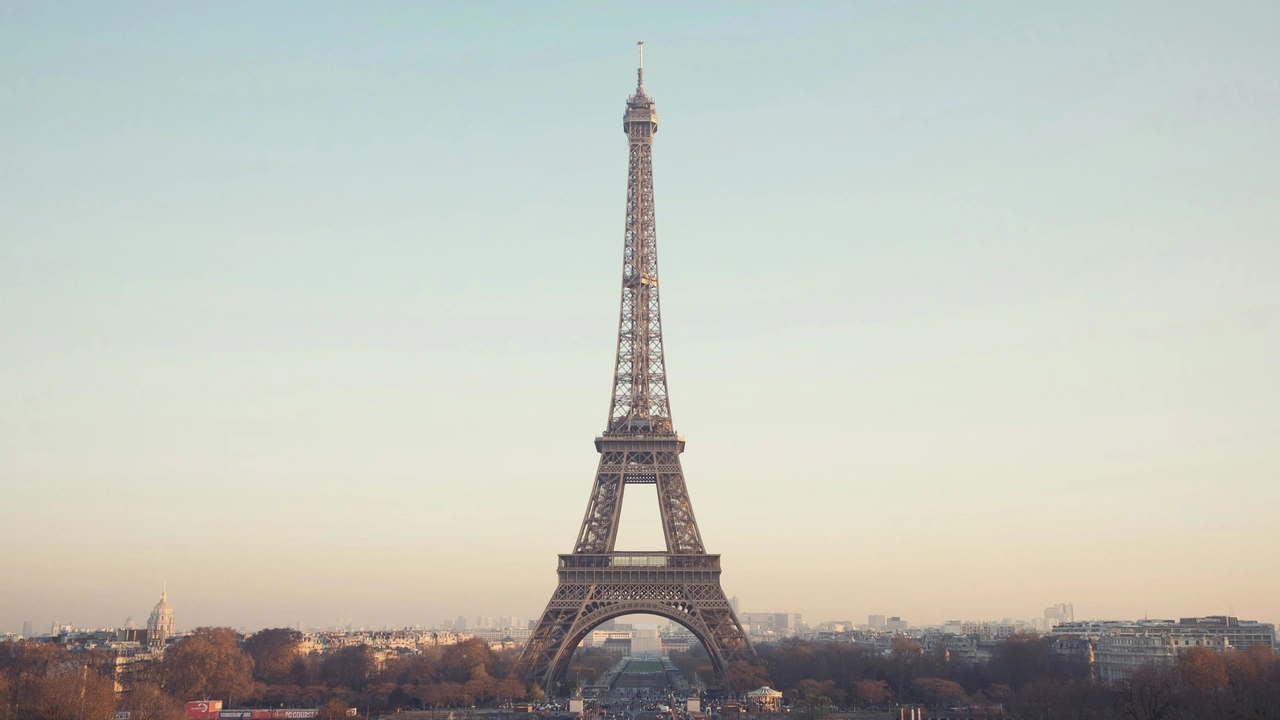
At 9:30 AM, visit the Eiffel Tower. In fact, your trip to Paris is complete with the exploration of this skyscraper. It is located at Champ de Mars, 5 Avenue Anatole France, 75007 Paris, France. Moreover, the price for the entrance is 10-25 EUR per person. It takes you approximately 2-3 hours to explore it. If you want to make the adventure unforgettable, take the elevator to the top and witness breathtaking views of Paris that lay bare beneath the tower. Lastly, enjoy a meal at one of its renowned restaurants.
Lunch at a charming Parisian café.
Time: 12:30 PM
Price: 15-30 EUR per person
Duration: 1-1.5 hours
Address: Choose a quaint café near the Eiffel Tower or in the Trocadéro area.
Indulge in French delights such as “croque madame,” “salade niçoise,” or “quiche aux légumes,” while enjoying the picturesque Parisian atmosphere.
Explore the Musée d’Orsay.
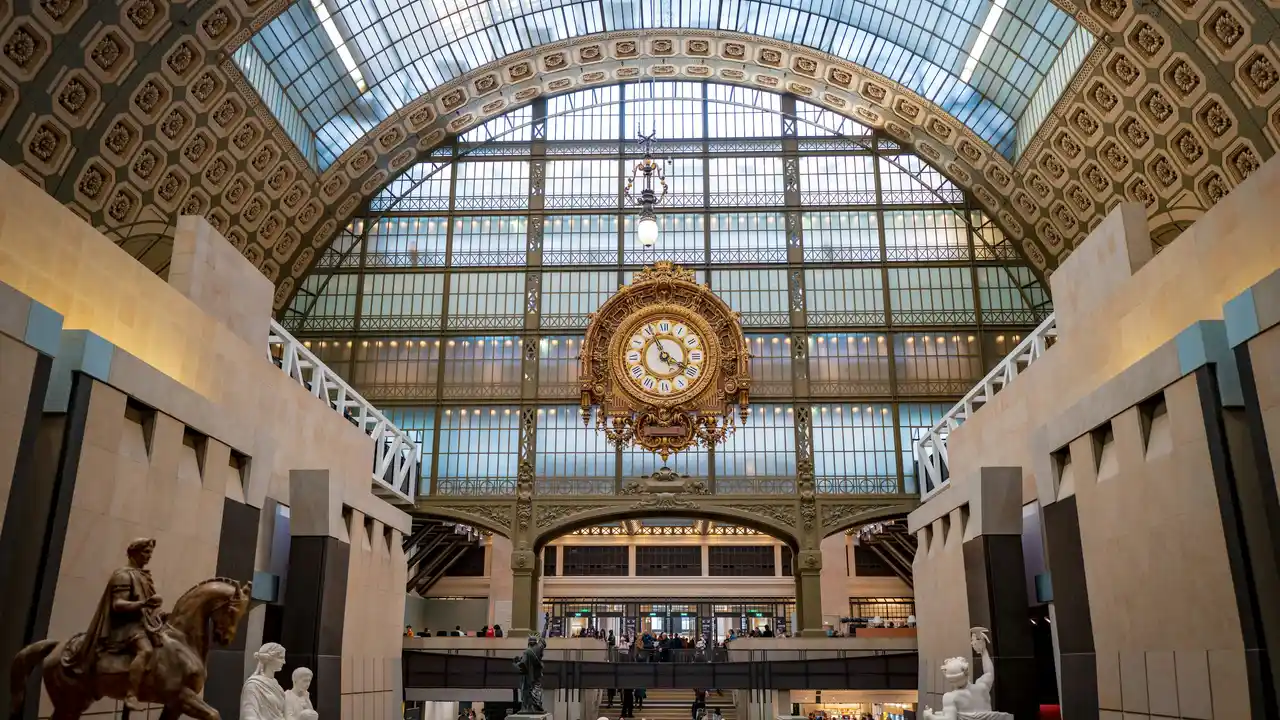
Time: 2:30 PM
Price: 12-16 EUR (entrance fee)
Duration: Approximately 2 hours
Address: 1 Rue de la Légion d’Honneur, 75007 Paris, France
Stroll through the Musée d’Orsay, home to an impressive collection of Impressionist and Post-Impressionist masterpieces by artists like Monet, Degas, and Van Gogh.
Afternoon coffee and French patisserie.
Time: 4:30 PM
Price: 5-10 EUR per person
Duration: 1 hour
Address: Find a charming patisserie in Saint-Germain-des-Prés or the 7th arrondissement.
Indulge in delightful French pastries like “Tarte aux fraises” (strawberry tart) and “mille-feuille” while sipping on coffee or a cup of herbal tea.
Dinner at a traditional Parisian restaurant.
At 7:30 PM, look for a traditional place for dinner. Preferably, choose a classic Parisian restaurant like “Le Relais de l’Entrecôte” or “Le Comptoir du Relais.” Besides, taste delicious French cuisine such as “entrecôte au beurre d’escargot” (steak with snail butter) or “canard à l’orange” (duck with orange sauce) in an awe-inspiring setting. The price of the meal per person is 30-50 EUR. In the same way, 2 hours are enough for the purpose.
Experience Paris’s cultural nightlife.
In fact, Paris’s cultural nightlife is beautiful beyond words. It has an indelible impact on individual tourists. Therefore, if you want to enjoy it to the fullest, explore Paris’s cultural districts, such as the Latin Quarter or Saint-Germain-des-Prés. Take part in Paris’s cultural nightlife. Visit a dramatic theatre performance, a lively and breathtaking classical music concert, or an art gallery. The price may vary depending on your choice or preference. The whole adventure takes 2-3 hours to accomplish.
Following that, return to your abode for relaxation. Maintain a diary and write down all the beautiful moments in it. Moreover, reflect on this unforgettable day filled with a lot of excitement. Have some rest for the next day and wait patiently for more adventures.
Paris 3-Day Itinerary – Day Three
Breakfast.
Begin the final day of your tour with a Parisian-style breakfast at a local café. The peak time for breakfast is typically 8:00 AM. Moreover, breakfast costs 10-20 EUR per person. Find a cosy café in Montmartre or Le Marais. Enjoy your breakfast with traditional “pain aux raisins” (raisin pastry), “croissant aux amandes” (almond croissant), or “omelette aux fines herbes”. Complement it with a cup of café crème or a well-brewed hot chocolate.
Explore Montmartre and visit the Sacré-Cœur Basilica.
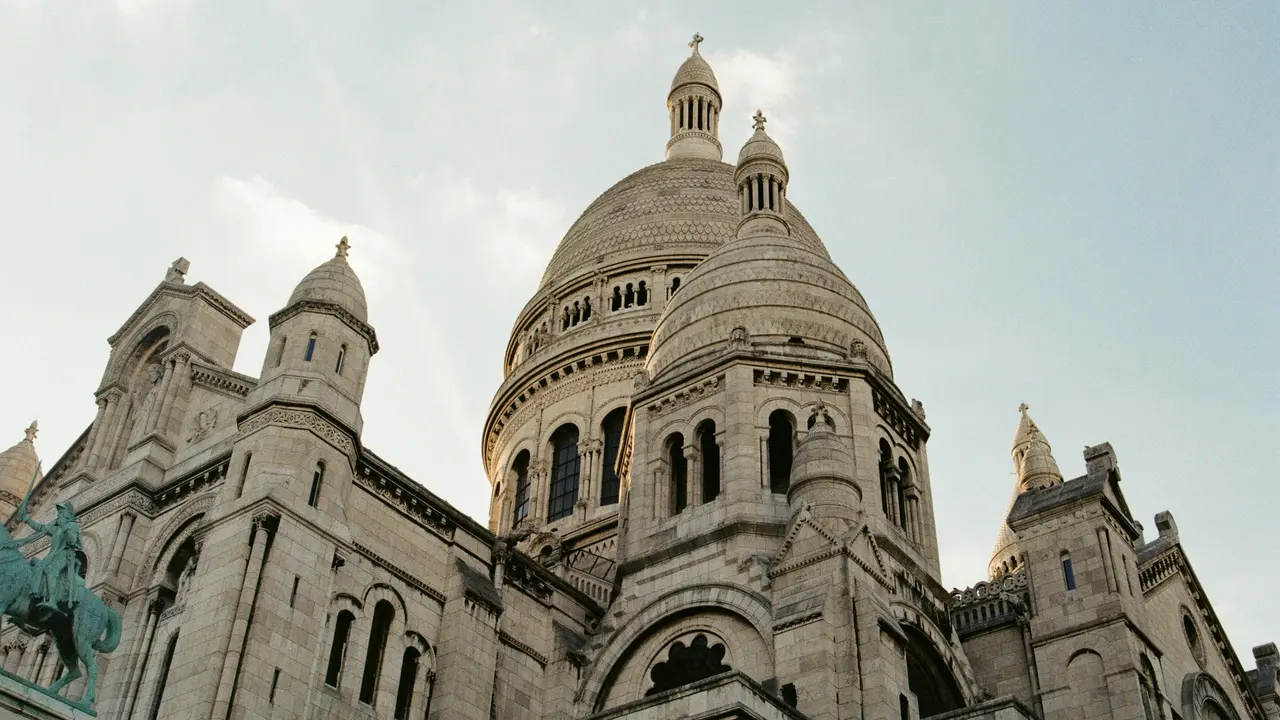
Time: 9:30 AM
Price: Free
Duration: Approximately 2 hours
Address: 35 Rue du Chevalier de la Barre, 75018 Paris, France
Discover the charming streets of Montmartre, a historic and artistic neighborhood. Climb the iconic steps to the Sacré-Cœur Basilica for panoramic views of the city.
Lunch at a traditional Parisian bistro.
Time: 12:30 PM
Price: 20-40 EUR per person
Duration: 1-1.5 hours
Address: Choose a traditional bistro in Montmartre or Le Marais.
Savour classic French dishes like “cassoulet,” “coq au vin,” or “boeuf en daube” while enjoying the bohemian ambiance of Montmartre or the trendy vibe of Le Marais.
Explore the Musée de l’Orangerie.
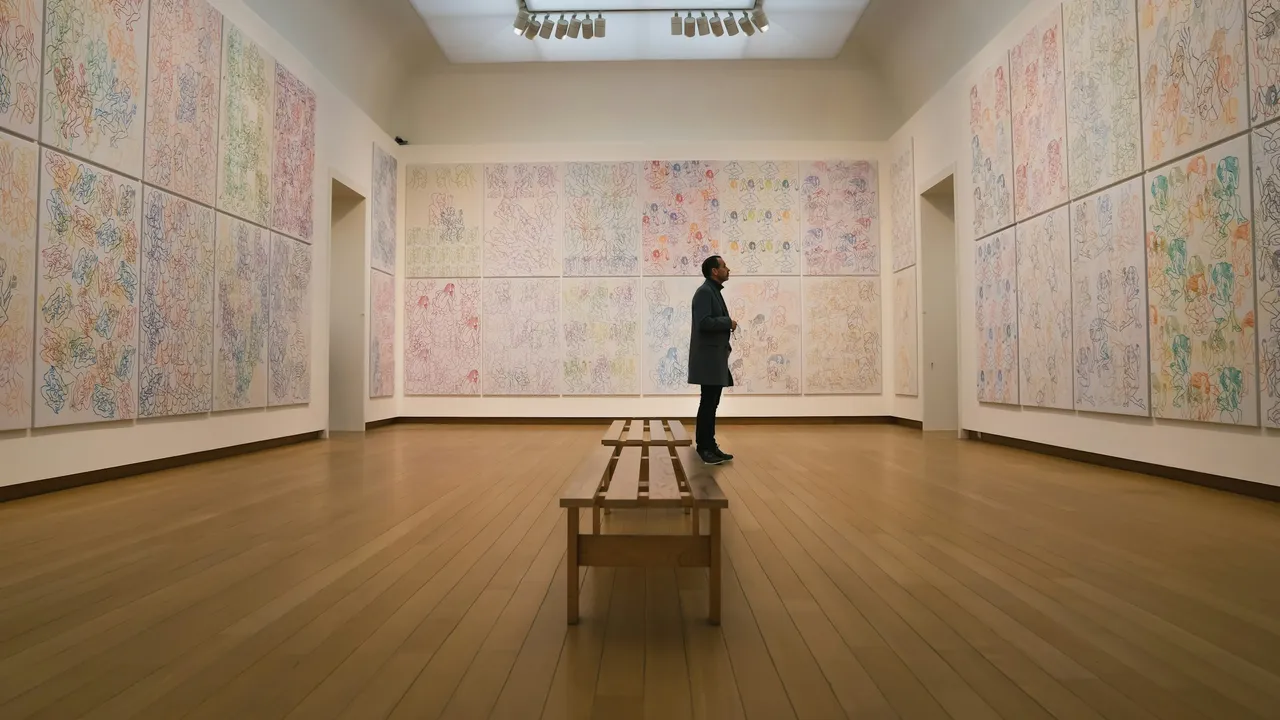
Time: 2:30 PM
Price: 10-12 EUR (entrance fee)
Duration: Approximately 2 hours
Address: Jardin Tuileries, 75001 Paris, France
Admire the Water Lilies series by Monet and other Impressionist works at the Musée de l’Orangerie, housed in an elegant 19th-century building.
Afternoon coffee and French Macarons.
Time: 4:30 PM
Price: 5-10 EUR per person
Duration: 1 hour
Address: Find a charming café in the Tuileries Gardens or the 1st arrondissement.
Indulge in French macarons of various flavors and a delightful cup of coffee or tea while enjoying the Parisian ambiance.
Dinner at a traditional Parisian brasserie.
At 7:30 PM, look for a traditional Parisian dinner. Choose a classic Parisian brasserie like “Le Bouillon Racine” or “Le Vaudeville.” It will take approximately 2 hours to have dinner. Moreover, the price is 30-50 EUR per person. The best options for dinner are traditional meals such as “coquilles Saint-Jacques” (scallops), “magret de canard” (duck breast), or “bouillabaisse”. The dinner is served in an elegant setting.
Experience Paris’s serene evening ambiance.
Before you return to your abode, experience Paris’s serene evening ambiance. Therefore, at 9:30 PM, take an evening walk along the Seine River or in the Jardin des Tuileries. Moreover, enjoy the tranquil evening atmosphere of Paris with a peaceful stroll through scenic spots or along the picturesque Seine River.
Lastly, after 2-3 hours of strolling, return to your Parisian abode. Think about the day’s most beautiful parts. Rest properly. Pack your bags for tomorrow’s departure!
Tips on Reducing Costs
- As a recommendation, if you plan to visit more historic attractions, buy a 2-Day Paris Museum Pass (€62), which includes access to the Louvre, Arc de Triomphe, Sainte-Chapelle, and Musée d’Orsay. It pays off if you visit at least four sites.
- Dining at a sit-down restaurant twice a day will empty your pocket very quickly. Do as the French do: go to any local store such as Carrefour or Monoprix and get a fresh baguette, local cheese, and some fresh fruit for a nice and cheap picnic in the garden.
- If your itinerary is flexible, please note that on the first Sunday of every month, many national museums, including the Musée d’Orsay, are free to visit. Nevertheless, queues during these days are incredibly long.
Information about Safety and Health
Paris is considered a safe city for tourists from other countries, but due to the large number of tourists, Paris is one of the most targeted cities by petty crimes and scammers.
- Be cautious when traveling on crowded metro stations such as Line 1, Line 4, and Line 9, especially in places such as the Eiffel Tower and the steps of Sacré-Cœur. Do not keep your mobile phone or wallet in the back pocket of your pants.
- If someone pretends to find a gold ring on the ground in front of you and tries to hand it to you, do not bother them, as they will later demand money for it.
- Usually, young individuals carrying clipboards will ask you to sign a petition for charity. Once done, they will demand cash.
Emergency Contacts & Health Services
In case of an emergency when staying in Paris, please contact one of the numbers below:
- 112: The European emergency service number for all EU countries (can be dialed from mobile phones regardless of whether a French SIM card is installed).
- 15: SAMU medical emergency service.
- 17: French national police service.
- 18: French fire department.
FAQs- Paris 3-Day Itinerary
The following section of FAQs will help you finalize your Paris 3-day itinerary.
1. Is 3 days long enough to see Paris?
Three days are more than enough for a first-time traveler to view the city’s most iconic landmarks if you group attractions by neighborhood. This includes the Eiffel Tower, the Louvre, and Notre-Dame. However, it should be fast-paced, so you need to prioritize your top sights and save deeper exploration for a future visit.
2. What is the best way to navigate the city during the Paris 3-day itinerary?
The Paris Metro is the fastest and most economical option in this situation. Make sure to avoid buying individual paper tickets. Therefore, you can download the Île-de-France Mobilités app or buy a Navigo Easy smartcard to digitally load a 10-ticket pack for discounted and contactless travel.
3. Is it mandatory to buy tickets for tourist places in advance?
Yes. It is strictly mandatory to book tickets for major sites like the Eiffel Tower and the Louvre. Usually, tickets sell out 4 to 6 weeks ahead, especially during the peak summer and spring seasons. Moreover, in case you show up without a reservation, this will result in long queues or being turned away entirely.
4. Can I travel to Versailles during this Paris 3-day itinerary?
Though it is possible via the RER C train, it is recommended for a 3-day trip. Why? A visit to the Palace of Versailles may take 6 to 8 hours minimum, including transit. If you add this into your itinerary, you have to cut out other major city-center highlights, like the Musée d’Orsay or Montmartre.
5. How much money should I have for each day?
If you are a mid-range traveler, you should budget roughly 50 to 100 euros per day, excluding accommodation. However, this can cover metro fares, casual bakery lunches, a sit-down bistro dinner, and entrance fees for one or two major museums or monuments.
Conclusion
We hope you’ve found the city of Paris to be one of the most beautiful places on the planet Earth. The most inspiring essence of this remarkable city is the historical buildings. In the same way, Paris boasts of its historically important museums such as the Louvre. Here you can find Western art such as the Mona Lisa and Venus de Milo.
However, a successful journey to Paris relies on thorough preparations. For instance, this includes securing a visa and understanding local etiquette, along with a well-planned itinerary that blends iconic landmarks with genuine neighborhood exploration.
Among other things, the charming streets of Montmartre represent the soul of Paris. The cuisine of the city has no comparison. You can find traditional dishes for dinner and lunch. This journey is just a glimpse into the boundless treasures of the City of Light, and we encourage you to return for even more adventures. Until then, may your memories of Paris be filled with art, culture, and the taste of exquisite French cuisine.
Au revoir, and safe travels!
Helpful Reads for Your Next Step:
Kraków 3-day itinerary→ This itinerary provides a 3-day travel plan for Kraków, featuring highlights such as the Old Town, Wawel Hill, and Auschwitz-Birkenau to assist with visa application documentation.
Helsinki 3-day itinerary → Go through this guide that blends striking Nordic architecture and vibrant design districts with relaxing seaside saunas, scenic fortress islands, and fresh Baltic culinary experiences.
Rome 3-day itinerary→ This 3-day itinerary maps out an efficient route through Rome, balancing iconic sights like the Colosseum and Vatican Museums with local dining and hidden gems.
A little Bit About Us
At Schengen Flight Reservation for Visa, we make the often overwhelming visa process a breeze. With verifiable documents at unbeatable prices, you are covered with Flight Reservations/Itinerary/Dummy tickets, Hotel Bookings (Proof of Accommodation), and a Travel Insurance Policy.
But that’s not all. Our services and blogs on writing a cover letter for a visa make your application process even smoother.
Are you stuck on something? Check our FAQs section or connect with us anytime through our 24/7 Live Chat because your convenience is our priority.
Our Blog section is your ultimate guide to navigating the ever-evolving world of visa policies & requirements.
Whether you are curious about the visa requirements for any country, changing visa rules & regulations, or need a comprehensive guide about any topic or visa of any country, then simply type your Query in our Blog search bar & get the ultimate detail in just a click.
So, let’s make your visa journey seamless, informed & stress-free!
most searched articles